
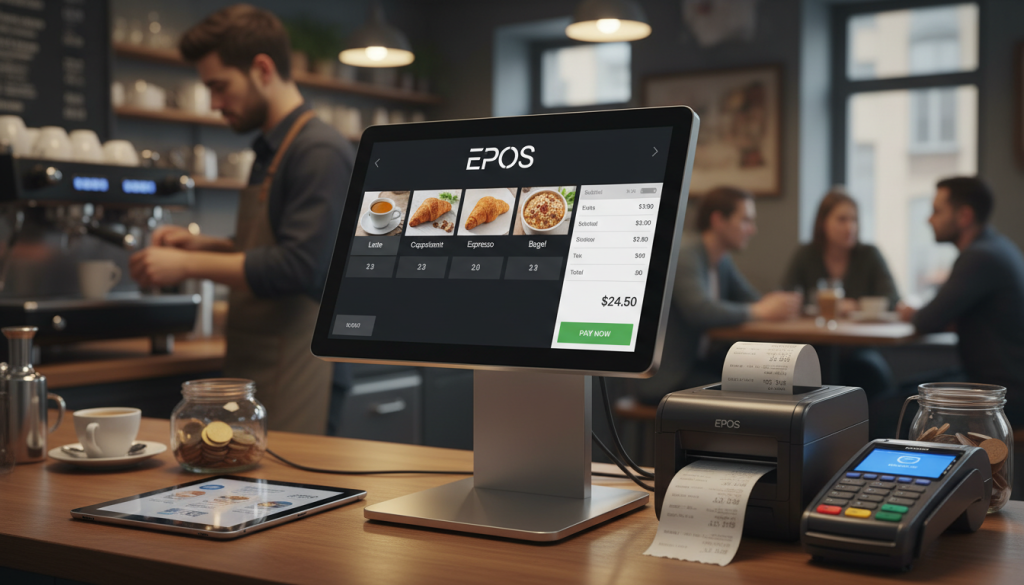
In the modern hospitality landscape, the distance between a customer’s craving and a chef’s kitchen is measured by the efficiency of a digital interface. The era of hand-written tickets and manual reconciliations has faded, replaced by an environment where precision is paramount. For business owners, choosing the right epos for restaurant operations isn’t just about processing payments—it’s about creating a seamless flow that enhances the guest experience from the moment they are seated until the final receipt is printed.
The Art of the Quick Serve: Why Small Venues Need Power
Small-scale venues, such as artisan bakeries and local coffee shops, face a unique set of challenges. In these environments, space is a premium and the pace is relentless. A cafe point of sale system must be more than a glorified calculator; it must be a compact command center.
When a barista is handling a morning rush, every second saved on a transaction is a second gained in beverage preparation. Modern systems allow for rapid item selection, intuitive modifier pop-ups (like milk alternatives or syrup shots), and integrated contactless payments. This level of optimization ensures that the “quick” in quick-service remains a reality, preventing the long queues that often deter potential customers during peak hours.
Scaling Up: Comprehensive EPOS for Restaurant Excellence
As a dining establishment grows in complexity—perhaps adding a bar, an outdoor terrace, or a multi-course tasting menu—the demands on technology shift. An effective epos for restaurant management must act as the central nervous system of the business.
Key features that define high-quality systems include:
- Table Management: Visualizing the floor plan in real-time to track occupancy and turnover rates.
- Handheld Ordering: Empowering servers to take orders at the table, which are instantly fired to kitchen display screens, reducing transit time and errors.
- Inventory Control: Tracking stock levels at the ingredient level to ensure the kitchen never runs out of a signature dish mid-service.
By automating these logistical hurdles, staff can return to the “hospitality” part of their jobs—engaging with guests, upselling specials, and ensuring every diner feels valued.
Data-Driven Decisions for the Modern Restaurateur
One of the most significant advantages of a professional cafe point of sale system is the depth of reporting it provides. Business owners no longer have to guess which menu items are their most profitable or which hours require more staffing.
Advanced analytics can reveal hidden patterns: perhaps a specific dessert sells significantly better on Tuesday evenings, or a particular staff member consistently achieves higher average transaction values. With these insights, managers can make informed decisions about menu engineering and labor scheduling, directly impacting the bottom line.
Integration: The Key to Long-Term Growth
In today’s interconnected world, a POS system cannot exist in a vacuum. The best platforms, such as those developed by Cube POS, offer seamless integration with third-party delivery apps, accounting software, and loyalty programs. This ecosystem approach ensures that whether a customer orders via a smartphone or at the counter, the data remains centralized and the inventory remains accurate.
This level of synchronization is what allows a single-site cafe to grow into a multi-location brand. It provides the consistency and control needed to maintain quality across different storefronts while keeping overhead costs manageable.
Conclusion: Investing in Success
The hospitality industry will always be about people, food, and atmosphere. However, the framework that supports those elements is increasingly digital. Whether you are searching for a robust epos for restaurant management or a streamlined cafe point of sale system, the goal is the same: to remove the friction from daily operations.
By investing in professional-grade technology, you aren’t just buying a screen; you are buying the freedom to focus on what you love—creating exceptional culinary experiences for your community.
