
Time is the one thing we all wish we could track better. While keeping track of years is simple enough, calculating the exact gaps between dates can quickly become a confusing mental puzzle. Whether you need to know a child’s precise age in months for a medical checkup, calculate an exact employment timeline, or just find out how many days you have been alive, manual calendar math is notoriously tricky.
Because our calendar system includes leap years and months of varying lengths, human error is common when counting days by hand. Fortunately, digital tools remove all the guesswork. Using a dedicated Age calculator gives you perfect, instantaneous accuracy. Let’s explore why this simple tool has become a modern essential for personal, medical, and professional planning.
Why Manual Date Calculations Lead to Mistakes
At first glance, calculating an age seems like basic subtraction. However, the Gregorian calendar makes things much more complicated than they appear.
- The Leap Year Factor: Every four years, an extra day is added to February. If you are calculating a timespan over several decades, forgetting to add those leap days will throw your final number off.
- Irregular Month Lengths: Months shift constantly between 28, 30, and 31 days. Tracking an exact duration from mid-March to late October requires tedious, error-prone counting.
- Milestone Shifts: In many legal and official scenarios, being short by even a single calendar day can impact eligibility or deadline submissions.
Because of these small details, trying to figure out exact time gaps in your head is highly inefficient. Automated digital tools handle these complex calendar rules in milliseconds, delivering error-free results every time.
Practical Ways We Use Date Calculations Every Day
While knowing your age in total days is a fun trivia fact to share with friends, precise time tracking plays a vital role across many real-world industries.
Professional and HR Admin
Human resource managers regularly need to determine precise employee service lengths, retirement timelines, and benefit vesting dates. Accurate data ensures smooth corporate operations and maintains compliance with employment contracts.
Parenting and Pediatric Milestones
In healthcare and parenting, age is rarely just measured in years. For infants and toddlers, development is tracked closely in weeks and months. Pediatricians rely on precise timelines to monitor growth charts and schedule critical vaccine dosages. A dependable calculator helps parents stay confidently on track.
Fitness and Project Management
From tracking a 90-day fitness transformation to managing strict corporate project sprints, breaking time down into precise day counts keeps us accountable. Knowing exactly how much time has passed—or how much remains—is the key to hitting goals.
Streamlining Your Digital Routine
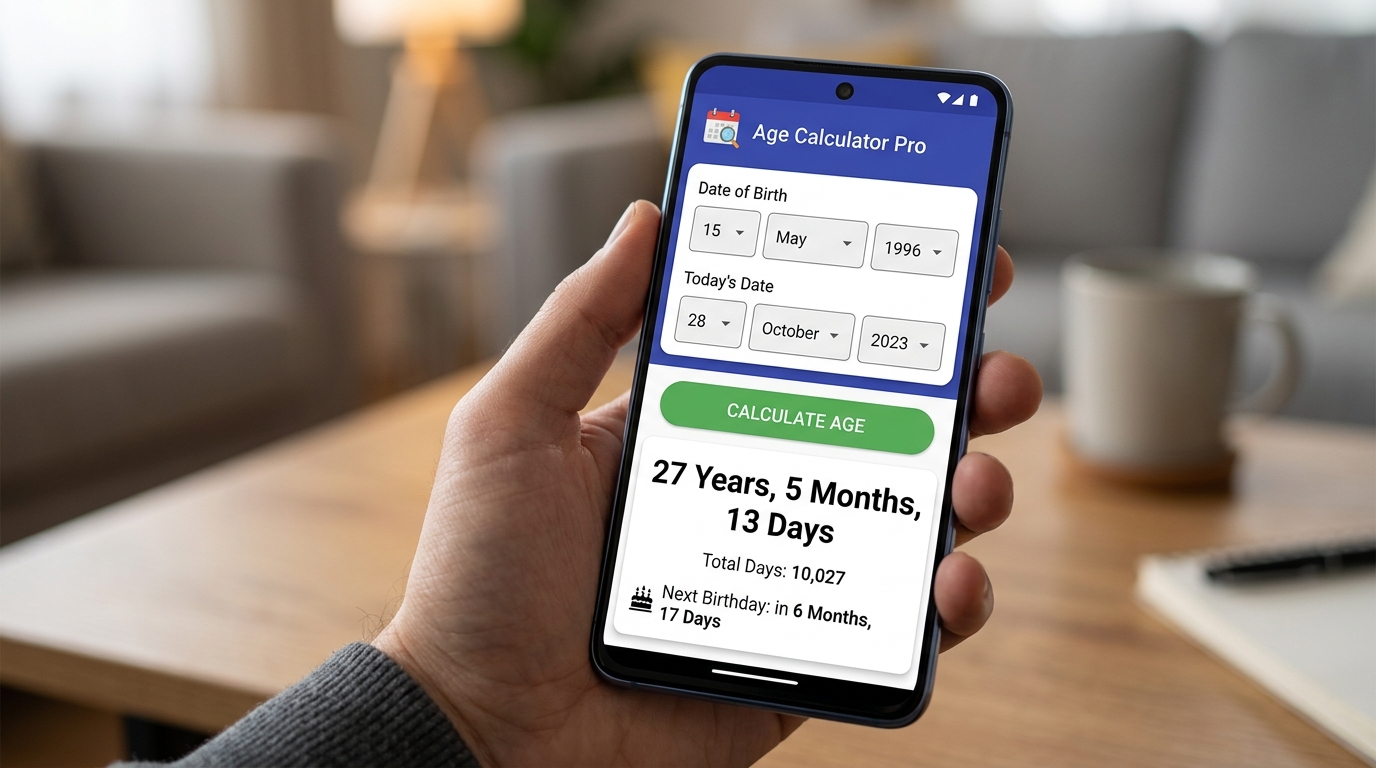
In our busy lives, convenience is everything. While you can find calculation tools online, opening a web browser every time you need a quick answer slows you down. Having a dedicated, lightweight mobile application right on your smartphone is much faster. Modern, user-friendly tools let you input a birthdate instantly, giving you a full breakdown of years, months, weeks, days, and hours in one clean view.
Summary
Managing our schedules effectively starts with calculating time accurately. By adding a dependable digital tracking tool to your everyday routine, you eliminate mental fatigue, avoid common math mistakes, and bring absolute precision to your personal and professional planning.
