
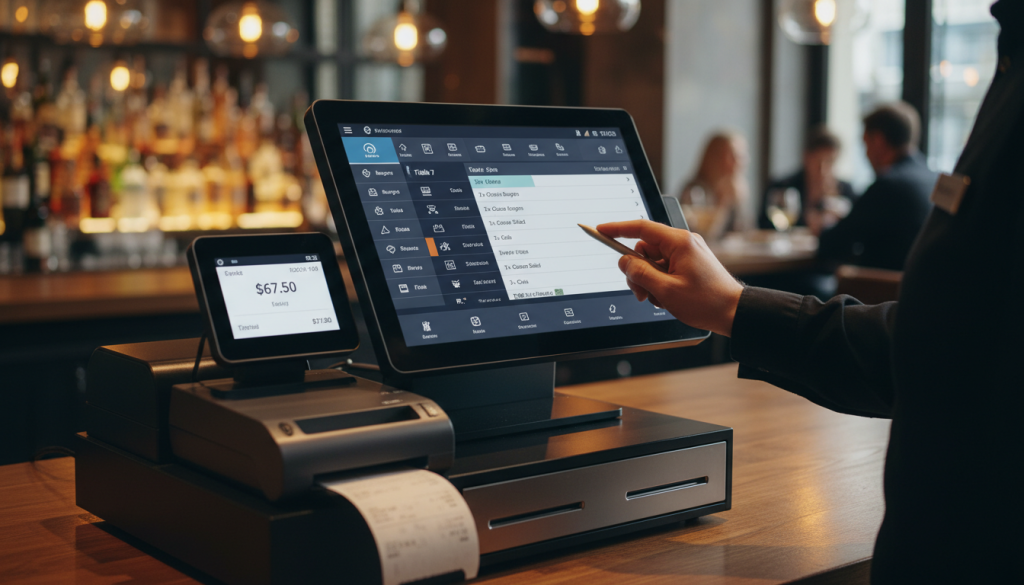
In the modern hospitality landscape, the dining experience begins long before the food hits the table and extends far beyond the final payment. For restaurant owners in the UK, the challenge has shifted from simply serving great food to managing complex workflows, rising overheads, and evolving customer expectations. At the heart of this transformation is the technology used to manage daily operations. A robust restaurant epos system is no longer a luxury; it is the central nervous system of a successful establishment.
The Shift from Transactional to Transformational Technology
Historically, a cash register was a passive tool used to store currency. However, as the industry has become more data-driven, the requirements for a point of sale for restaurants have matured. Today’s operators need real-time insights into inventory, staff performance, and customer preferences.
When you transition to a sophisticated restaurant epos system, you aren’t just changing how you take payments. You are implementing a tool that synchronizes the front-of-house with the kitchen. This synchronization reduces the “noise” of a busy service, allowing floor staff to focus on hospitality rather than troubleshooting order errors or running back and forth to a stationary terminal.
Efficiency in the Kitchen and at the Table
One of the primary friction points in any restaurant is the communication gap between the server and the chef. Modern point of sale for restaurants solves this by utilizing digital ticket routing and kitchen display systems (KDS).
Consider the impact on “turnaround time.” When a server can take an order at the table on a handheld device and have it instantly appear on the kitchen’s screen, you shave minutes off every course. Over the span of a busy Friday night, those minutes aggregate into extra table turns, significantly boosting the evening’s revenue without requiring additional square footage.
Data-Driven Decision Making
The true “human touch” in a restaurant comes from the owner’s ability to understand their guests. A high-quality restaurant epos system provides the analytics necessary to make these connections. By analyzing sales data, owners can identify:
- Menu Engineering Opportunities: Which dishes are “stars” (high profit, high popularity) and which are “plowhorses” (low profit, high popularity) that need a price adjustment?
- Labor Optimization: What are the exact hours when staffing levels need to be at their peak, and when can you trim the rota to save on costs?
- Wastage Control: By integrating inventory management directly into the point of sale for restaurants, you can track stock levels in real-time, preventing over-ordering and reducing the environmental and financial impact of food waste.
The Future of British Hospitality
As we look toward the future, the integration of technology like that offered by Cube POS will continue to define the market leaders. Guests now expect a seamless journey—from online bookings to flexible payment options like Apple Pay or split-billing. A legacy system that crashes during peak hours or fails to integrate with third-party delivery apps is a liability that modern businesses cannot afford.
The goal of integrating a high-end restaurant epos system is not to replace the warmth of human service with a cold machine. Rather, it is to remove the administrative burdens that prevent your staff from being truly present with your guests. When the technology works perfectly in the background, the “human touch” is allowed to shine.
Conclusion
Choosing the right point of sale for restaurants is a strategic move that affects every stakeholder, from the dishwasher to the regular customer. By investing in a system that offers reliability, deep analytics, and intuitive interfaces, restaurant owners can ensure their business remains resilient in a competitive economy. For those ready to elevate their operational standards, exploring specialized solutions like those at Cube POS is the first step toward a more profitable and less stressful future.
